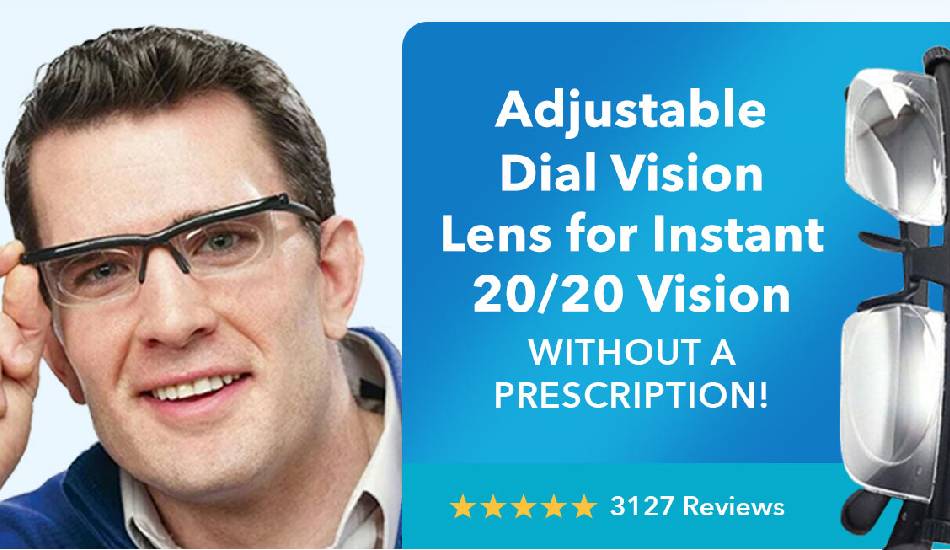
Adjustable vision glasses let you change the focus yourself, usually by turning a small dial on each arm. It's an appealing idea if you keep separate pairs for reading, screens and distance. Here are honest answers to the questions worth asking first.
Depending on the design, the dial either moves lens elements, reshapes a fluid-filled lens or slides two lens layers across each other. Each approach changes the focusing power so you can sharpen what you're looking at.
People with presbyopia — the gradual loss of close focus that usually begins in our 40s — and anyone who switches often between reading, a laptop and middle distances. They also make a practical spare pair for the car or a travel bag.
Yes, most models have an independent dial for each lens, which helps if your eyes differ slightly.
Most designs don't correct astigmatism, each covers a limited range of strengths, and the sharp viewing zone may be smaller than with custom prescription lenses. Frames can also be a little bulkier.
Cover one eye and turn its dial until text is crisp; repeat with the other eye. Re-adjust when you change tasks, and clean the lenses with a microfiber cloth.
No. They're a convenience tool. An eye exam checks the health of your eyes as well as your prescription.
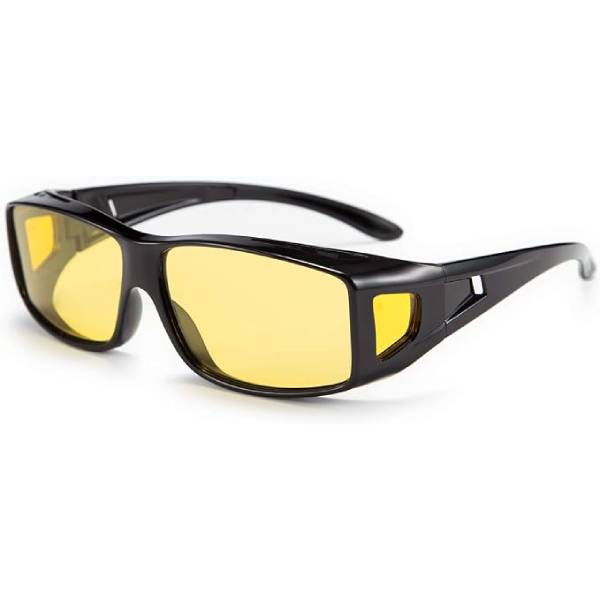
Bright Texas sun brings plenty of glare. If you already wear glasses, polarized fit-over sunglasses slip over your frames for driving.
See an optometrist or ophthalmologist promptly about sudden vision changes, eye pain, flashes of light or new floaters.